|
| *Have you found the information and Maps
on these pages useful? Please acknowledge the Free Settler or Felon site if you
wish to reproduce anything from these pages
|
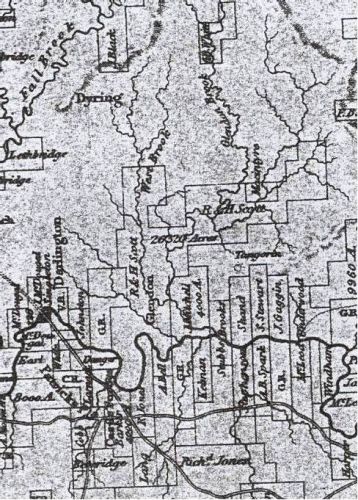
Click on a name on
the map below or scroll down the page to find settlers on this page
Hunter River - Glendon -
Darlington - Singleton - Patrick Plains
|
Hunter Valley Settlers on this Map
Archibald Bell junior (Corinda)
James Black
William Brooks
James Busby
John Cobb (Minimbah / Rusholine)
Henry Dangar
John Earl
John Gaggin
William Harper (Oswald)
William Dalrymple Kelman
(Kirkton)
John Larnach (Rosemount, Castle Forbes)
David Maziere
James Mitchell
Robert and Helenus Scott (Glendon)
Alexander Shand
Benjamn Singleton
Alexander Brodie Spark
Thomas Steele
Joseph Underwood
George Wyndham (
Dalwood)
George
Boyle White (Greenwood Estate)
Henry
Dangar
Henry Dangar
arrived in New South Wales on the ship 'Jessie' in
1821 and was appointed assistant government surveyor
under John Oxley. He remained in this position until
1827, surveying among other places, the township of
Newcastle. He received two grants of land for his
services as a surveyor - 300 acres named 'Neotsfield'
and 700 acres known as 'Baroona'. He returned to England in 1828 leaving his estates in the hands
of his brother William, and when he returned to Australia
his new wife Grace Sibly accompanied him
29.
Land at Kingdon Ponds was granted after his
return and in Port Stephens he completed survey work
for the Australian Agricultural Company until 1833.
In 1848 Henry Dangar
together with his brothers Richard and William began a
meat canning factory at Honeysuckle Point,
Newcastle. The Maitland Mercury recorded the
following :
'There can be no doubt that a most important
trade, that of preparing fresh meat for exportation
is gradually springing up. A very large
establishment belonging to Mr. Henry Dangar has just
been completed at Newcastle and commenced
operations yesterday. With some of the Finest
and cheapest meat in the world, there can be
no reason why this trade should not increase
until preserved meats are looked upon as one
of the staple exports of the colony' 14 The Newcastle
Meat Preserving Company had been established after
the Depression and drought of the forties caused a decline in cattle and
sheep prices. Although the business won awards at the Great Exhibition of 1851
and exported their product to India and California, the company had ceased to
operate by 1855. 22
From 1846 to 1851 Henry was a
Member of the Legislative Assembly. In 1847 he
entertained the Governor Sir Charles Fitzroy at
Neotsfield, providing refreshments before the party
moved on to Singleton however later that night at a
dinner for the elite of the township he was rebuked
by the Governor when he attempted to introduce
politics into the conversation.' 14
The Maitland Mercury wrote
of him in 1848 when he was a candidate for the
Northumberland county:
'Dangar has shown that he is one of those who are
prepared to uphold the pecuniary interests of the
woolgrower and the employer of labour at any
sacrifice; he is for the resumption of
transportation in any shape - either the old or the
new, and has no objection to the importation of
cannibals or coolies, providing that a profit can be
extracted out of their labour. He has however always
expressed an anxiety for free British labour; and is
one of those who only side with Dr. Bland when the
Dr.'s crotchet can be made available for procuring
an additional supply of labour. As a squatter he is
one of the ultras, though we must do Mr. Dangar the
justice to say that we believe he is desirous of
seeing a reduction in the price of land . The
electors of Northumberland may take it for granted,
that on all questions in which the immediate
interests of the squatters or of the employers of
labour are at issue with those often general
community Mr. Dangar will be found amongst the
advocates of class interests. Apart from these
interest Mr. Dangar has made a good useful member of
Council. Unlike many of the country members he has
been regular in his attendance and he has made a
point more especially of being there when the
estimates were under discussion, and has bee n a
steady and independent advocate for economy and
equally in the expenditure of the public money. His
views on most practical questions are marked by good
strong sense; and in matters affecting different
religious communities he has shown a steady desire
to carry out the spirit of Sir Richard Bourke Act.
In the promotion of the district and local interest
Mr. Dangar has bee zealous and active 14Dangar extended his land
holdings and by the 1850's his stations included:
Gostwyck
48,000 acres
Paradise Creek 32,000 acres
Bald Hills 19,200 acres
Moonbi
25,000 acres
Bulleroi
64,000 acres
Karee 64,000 acres
Myall Creek
48,000 acres.
Henry Dangar died on 2nd March,
1861.
.
William Dalrymple Kelman
'Kirkton'
In
1844 Governor Gipps on his long awaited trip to the
Hunter, breakfasted at Mr. Dawson's residence at
Black Creek and then proceeded to 'Kirkton' to
inspect the vineyards before passing through Glendon,
Neotsfield and Rosemount and reaching the township
of Singleton. He was later to tell the assembled
dignitaries of the town - no doubt William Kelman
among them - that he 'would never wish to pass
over more pleasant roads than those he had been on
that day'. Funding to repair the road used by the
public therefore would not be forthcoming. This may
not have pleased many in the town as the roads he
had used were inaccessible for public conveyance and
were vastly different to the public roads used by
most.
The vineyards
Governor Gipps inspected were those established on
Kirkton by amateur vigneron James Busby, son of John
Busby who had originally been granted the land. The Busbys had arrived on the Triton in 1824
along with William Kelman who was later to marry
John's daughter Katherine.
Later, James
Busby travelled to Europe and returned with vine
cuttings which were planted at the Botanical
Gardens, Sydney and at Kirkton. The vineyards at
Kirkton were managed by William Kelman.
Although an advertisement appeared in the Mercury in
1848 stating that all household furniture, 200
sheep, horse stock etc on 2000 acres of land granted
to John Busby would be auctioned unless quit rent
paid, the land remained in the family as William Kelman inherited Kirkton on the death of John Busby
in 1857.
Among the
convicts assigned to William Kelman at Kirkton were:
James Smith, William Falconer, Charles Gaggin, John
Gannon, John Reardon, and William Simpson. Ticket of
Leave holder Joseph Thompson was employed as a
cooper.
By 1845 Kelman
was advertising to sell vine cuttings 'of the best
varieties for wine' at the following prices:
White Hermitage 5/- per 100; Red Hermitage 5/- per
100; Champagne 5/- per 100; Red Burgundy - Pineau
Noir 30/- per 1000; White Burgundy 30/- per 1000;
Verdilha, Madeira grape 30/- per 1000; Xeres, Sherry
grape 30/- per 1000; Legrat 30/- per 1000; Muscats
30/- per 1000. He stated that the Hermitage Vines
after 10 years experience, have proved to be hardy
and good bearers never having been blighted; the
produce being of a strong body and excellent flavour
In 1847 a
meeting was held in the Northumberland Hotel,
Maitland to take measures to form 'an association of
vine growers, for the purpose of communication and
mutual advantage'. The Association was established and a
code of laws framed by the ten gentlemen attending the meeting who
thought that vine
growers of the district would benefit from being
able to meet to test each others produce and acquire
or communicate desirable information regarding the
culture of the vine and manufacture of the wine.
William Kelman played an active role in the meeting
proposing several resolutions. Others present at the
meeting included James King, A. Windeyer, A. Lang,
E. Hickey, w. Dun, J. Phillips Mr. Carmichael, and
Mr. Burnett.
Resolutions
passed included:
1. That the
Association would by known as 'The Hunter River
Vineyard Association'
2.Meetings
would be at least half yearly and half at Maitland.
5 members to constitute a quorum
3. At the first
half yearly general meeting the committee would be
elected
4. Must be a
cultivator of the vine to be a member
5. Candidates for
admission were to be proposed by another
member
6. That each
member would pay 10/- to defray expenses
7. That members
were to communicate in writing with information or
suggestions
8. That each
member would furnish annually at least 8 bottles of
wine from his vineyard, the wine to by sealed,
labelled and packed and locked in a box and
accompanied with a statement specifying soil,
aspect, mode of culture, age of vines type of grape,
age etc
9. President
to be elected at the general election and every half
yearly general elected one half on the wine
contributed would be examined
10. That at every
half yearly general meeting the members would lunch
together and assess the remaining wine
11. That each
member could introduce a friend to the lunch
George Boyle White
'Greenwood Estate'
1802 - George
Boyle White born 24 August 1802 in Ireland.
1827 - Employed as
Assistant Surveyor in New South Wales
1830 - Surveyed
Maitland
1830 - Married
Maria, the daughter of James Mudie of Castle Forbes
1831 - Accompanied
Sir Thomas Mitchell and Heneage Finch on their
expedition to the Barwon River
1832 - Surveyed
land of the Australian Agricultural Company
1833 - Surveyed
Muswellbrook
1834 - Infant daughter
died 4 August 1834 at Lochinvar
1835 - Surveyed
Raymond Terrace
1838 - Promoted to
Surveyor. Hunter River District
1844 - Surveyed
Hunter River preparatory to dredging
1844 - Selling by
auction 3500 sheep, 1000 cattle, horses, carts,
drays, oxen
1844 -
'Greenwood Estate'. To be sold by order of trustees.
In June 1844 the Estates of George
Boyle White were advertised for auction, 14 lots in
all. It was stated that everybody that had ever
visited Hunter's River must have heard of Mrs.
White's beautiful Greenwood Estate. It consisted of
380 acres and adjoined the Town of Singleton;
the most part of it was cleared and fenced and
returning yearly rent of 15/- per acre. There was a
cottage, office, outbuildings, Vinery, 7 acre garden
and an orchard where every variety of fruit was
grown in perfection and plenty. Also for auction was
a Church section adjoining Greenwood consisting of
585 acres, a cottage and land at East Maitland, 1280
acres on Miranne Estate, 1000 acres on Miranne
estate and an 86 acres farm at Lochinvar. Eight
hundred head of cattle were running at the Severn
under the superintendent of Mr. Hethrington and 300
head of cattle at Meranne Creek together with 50
head of cattle at Greewood. There were 2500 fine
woolled sheep, horse stock, household furniture and
250 bushells of wheat also offered for auction.
1848 - Youngest
daughter Maria Larnoch White died 3 years 8 months
of age at Greenwood , Singleton
1853 - Retired
1876 - Died 25 May
1876
Benjamin Singleton
Benjamin Singleton, son of convict William, arrived free on the convict
transport Pitt in 1792. His Mother and brother Joseph were also
on board. Brother James arrived in the colony later. Benjamin received a
grant of land in 1821 after he made explorations into the Hunter Valley. His
wife and five children accompanied him over the rugged Bulga track in 1823 to his property which later formed part of the town of
Singleton.
James Black
James
Black was granted 2560 acres of land at Falbrook
near Mt. Dyrring by Governor Darling on 21
February 1828.
Two convicts assigned to him in 1832 at Falbrook
were John Garvy and Daniel McCarthy who
arrived on the City of Edinburgh.
In 1836 this land was re - advertised in favour of
Thomas Steele.
Convicts assigned to Thomas Steele in
1836 were William McPhillips who arrived on the
Royal Sovereign in 1834, William Beresford who
arrived on the Susan in 1834, and Edward
Bourke who arrived on the Florentia in 1830
Thomas Steel had passed away by 1841.
James Busby
More about
James Busby
James Busby was granted 2000 acres of
land in 1828. This land was situated on Carrowbrook nearby land granted
to James Black.
In England in 1831 James Busby gave
evidence to the Select Committee investigating Secondary Punishment of
prisoners.
Robert & Helenus Scott
'Glendon'
Robert
Scott (born c. 1799) and his younger brother Helenus, who was born
in 1802 in Bombay, India, arrived on 4th February
1822 on board the Britomart. Their father,
Dr. Helenus Scott who had been head of the Bombay
Medical Staff of the East India Company was
accompanying them however he died on the voyage out
in November 1821 and was buried at the Cape of Good
Hope.
Also on board the Britomart was John Galt Smith who was to settle
on the Hunter River as well. Their brother Alexander Walker Scott would later to
follow them to Australia.
Robert and Helenus
soon received land grants of approximately 2000
acres each. They combined their land and named the
estate 'Glendon'. This land had one advantage over many
other Hunter River estates, in that it was not liable to damage
from floods, being too high for the water to reach
9
Here, with the use of their convict
labour, they built a house of stone with cellars and a
basement kitchen. Six large rooms were connected
with a covered verandah. Also on the estate was a
small cottage built by Robert which sometimes
accommodated Capt Charles Forbes, the Police
magistrate for Patrick Plains. In March 1831 the
estate was visited by Sir Edward Parry on his
journey to the Liverpool Plains. He described
Glendon as a 'good, but not a pretty farm. Everything seemed well conducted
according to Parry, but there was nothing very
striking about the farm as he had expected.9
Robert and Helenus
bred blood horses at Glendon, possibly later using connections
in Bombay to export their stock. By 1832 they had
300 horses although the stud was sold in the 1840's.
Their mother
Augusta Maria, daughter of Colonel C. Frederick
accompanied their sister (also Augusta Maria) to
Australia in 1832. Their mother lived on the estate
with them,
28
perhaps helping to entertain the many
guests that her son Robert, invited to 'Glendon'.
Robert entered the social life of the colony with
enthusiasm soon after his arrival. At Glendon he was
host to artists, explorers, clergy and scientists.
Robert was granted 560 acres in 1828 and in 1836 1000 acres (that had
been granted to John McIntyre in 1825 by Governor
Brisbane), was re advertised in favour of Robert. Glendon was across the Hunter from William Bell's
property and when the river was not in flood it was
possible to cross here. A visitor to the area in
1834 noted extraordinary rock formations two miles
upstream from Glendon which stood in regular rows in
the bed of the river, perfectly round in shape and
10-12 feet in diameter. 28
Robert seems to
have been fearless in his pursuit of bushrangers. In
1825 he led a pursuit party to capture Jacob's mob
who had been robbing settlers throughout the
district. In 1833, he joined John Larnach and
Mounted Police in the pursuit of absconders from
James Mudie's Castle Forbes. They followed the runaways into
a deep ravine near Lamb's Valley and when one of the men, James
Henderson, refused to lay down his gun, Robert fired at him and
Henderson fell, fatally wounded.
8
Convicts assigned
to the brothers in 1823, soon after their arrival
were John Beaumont, John Fitzgerald and Michael
Gallagher. In 1832 Joseph
Stevens, John Joy, William Toll, John Dalkin, James
McGuire, William Pearson, John Rayhorne,
Thomas McKenna, Thomas Phillips, James Kerrigan,
William Glover and George Wily were all assigned
convicts at Glendon.
In 1834 a more
controversial prisoner was assigned to Robert. James
Brine, one of the Tolpuddle Martyrs had the
misfortune to be sent to Glendon. He was told by
Robert when he arrived ' You are one of the
Dorchester machine-breakers, but you are caught at
last' Brine was given the task of digging postholes
although his feet were cut and sore. And although he
became ill after spending days in a creek washing
sheep and badly needed a blanket, Robert refused to
give him any blankets, shoes or clothing until the
six months regulation period was up. He told Brine '
I will give you nothing until you are due for it .
What would your masters in England have had to cover
them if you had not been sent here? I understand it
was your intention to have murdered, burnt and
destroyed every thing before you, and you are sent
over here to be severely punished, and no mercy
shall be shown you. If you ask me for any thing
before the six months is expired, I will flog you as
often as I like - don't you know that not even the
hair on your head is your own?' 25
Robert and
Helenus were both
Magistrates. Robert was appointed Magistrate in 1833
however after his defence of the Myall Creek
murderers in 1838 he was removed from this position.
He had retired from public life by April of
1843 due to ill health and he died on the 30th July
1844 aged 44 years. 19
In 1846 Helenus
Scott engaged coolies from India to work as
shepherds at Glendon. They refused to work when
summer clothing was denied them and were taken to
Court by Scott. The Magistrate found there was no
stipulation in their agreement to receive a suit of
summer clothing and handed out the above sentence.
They received their punishment very 'cavalierly'
saying "Gaol - very goot - no work gaol"!!
Due to the early
death of Robert, involvement with the Bank of
Australia, and the depression of the 1840's, Helenus
experienced financial difficulties and by 1848 was declared insolvent.
Glendon was sold. An auction was held on Tuesday and
Wednesday 22nd and 23rd August 1848 to dispose of
belongings at the estate. No doubt a large crowd
turned out to the well known 'Glendon' to witness
the proceedings. Among items auctioned were 600 head
of cattle, 4 teams of working bullocks, 20 milking
cows, horses, 30 pigs, 12 tons of hay, a portable
thrashing machine, a flour mill, farming implements,
timber, bricks and shingles, carriage and gig
harness, saddles, a carriage fitted with lamps and
bars for four horses, wagon, drays, carts,
carpenters', blacksmiths' shoemakers' and curriers'
tools, iron hurdles, wool press, steam boiler, five
vats for boiling down, casks for tallow, a copper
still, large winch, 1000 volumes of books, 50 casks
of colonial wine including hock, burgundy and
sauturns.
Furniture was also
later auctioned. Included in the auction was a
handsome mahogany spring sofa with horse hair
covering; Mahogany chairs in hair and cane seating;
handsome London made sideboard with barrel fronts;
two bidets; one handsome mahogany bureau and one
cedar bureau; a mahogany ladies dressing table with
large looking glass; ladies work box of Ceylon wood;
Dutch spirit case with bottles and glasses; two
writing desks; two iron double bedsteads; hair and
wool mattresses; dining, dressing and other tables;
wash stands; wood bottom chairs, solar lamps,
looking glasses, decanters, tumblers, earthenware
etc.
'Glendon'
was advertised to let in 1849. It was described as
containing about 23,000 acres with an excellent
mansion with extensive Stores, stabling and wool
shed (and press), numerous out buildings and
offices. There was a large garden, vinery and
orchard stocked with the most valuable and choice
vines, fruit trees and shrubs. A boiling down
establishment with steam apparatus was complete. The
Estate was said to be well watered by the River
Hunter, Glendon Brook and other tributaries.
Helenus settled at Newcastle with his
wife Sarah Ann (Rusden) He died on 24th August
1879 in Newcastle and was buried at Glendon.
James Mitchell
In
1821, shortly after joining the 48th Regiment in
England, James Mitchell was sent to New
South Wales as assistant surgeon to the 48th. In
1822 he travelled to Newcastle on the Elizabeth
Henrietta where he possibly met with Helenus and Robert Scott, his future
brothers in law. Mitchell was granted 2000
acres of land which he selected at Glendon Brook
near Singleton. His property adjoined that of
Helenus and Robert Scott.
He did not settle
on this land but continued in the capacity of
Colonial Surgeon. He further invested in
industry around the Newcastle area - and land
throughout the Hunter district.
Augusta Maria
Scott, sister of Robert and Helenus, accompanied her
mother to Australia in 1832 and in 1833 she married
James Mitchell. Their son, David Scott
Mitchell, founder of the Mitchell library, was born
in 1836 and Mitchell left his position as surgeon
and resigned from the 48th Regiment to live in
Sydney.
James Mitchell died on 1st
February 1869
William
Brooks
In December 1830,
William Brooks gained permission to depasture his stock on land
adjoining his own 1000 acres at Marwood. His land adjoined Alexander Shand's on the east.
Alexander
Shand
Alexander
Shand first travelled to Newcastle in 1822 on board
the Minerva, perhaps to select this land. He
returned in 1823 on the Marina with convicts
assigned to him and received supplies and 2000
bricks from the Government. Convict James Tallent, a
plasterer who arrived on the Tottenham had
been assigned to Shand however the assignment was
disputed and Tallent was removed from Shand's farm
in 1824 by bush constable Joseph Sedgley. By
February 1824 Shand was applying to be supplied with
cows from the Government herd and to be assigned
more servants. He received a Newcastle town
allotment in 1824.
Shaw Stewart
John Gaggin
John
Gaggin arrived from Ireland in January 1819 on board
the Globe. He was employed as a storekeeper
in the Commissariat Department at Windsor. In
1822 a daughter, Ann was born to John Gaggin and
Lucy Freeman and in that same year he married Mary
Louise Brabyn, daughter of Captain John Brabyn. John
and Mary Louise Gaggin had nine children over the
next eighteen years.
In 1832 Gaggin
lost the Hunter River property and in 1838
Charles Throsby was leasing by auction 'the land
known as John Gaggin's farm'
14
Gaggin remained in the
area and may have lived at Sydenham at Falbrook as
in February of 1847 he was
introduced to Governor Sir Charles Fitzroy on his
visit to Singleton and later that year his wife Mary
posted a notice in the Maitland Mercury that there was to
be no unauthorised disposal of wool clip from
sheep running at Sydneham'
14
Joseph Underwood
The
wealth of coal and cedar to be found on the banks of
the Hunter River led to the development of a regular
coastal trade. About forty vessels made Newcastle
voyages between 1803 and 1821 although not all
regularly. Simeon Lord was the first to gather coal
from this region for export in 1801. Other early
traders were James Underwood, Henry Kable and
Isaac Nicholl. In 1810 those trading with goods
from the Hunter included Solomon Wiseman, Mary Reiby,
Garnham Blaxcell and James' brother, Joseph
Underwood. 10
Joseph Underwood
was born in 1779 and arrived in New South Wales on
the 'Sydney Cove' in June 1807.
27
On board the
Sydney Cove also were 109 female convicts and
four boys who were escorted by soldiers of the N.S.W.
Corp. Joseph was accompanied by his wife Charlotte
and their two sons and his mother. Their daughter
Elizabeth was born on the voyage out however died a
few months after reaching Sydney. The Sydney Cove
was owned by Joseph's brother James Underwood in
partnership with other Sydney traders Henry Kable
and Simeon Lord.
Joseph Underwood
owned several vessels. One, the 'Campbell
Macquarie' was captained by Richard Siddons
who was also to later settle in the Hunter Valley.
Another, the 'Elizabeth & Mary' which Joseph
purchased from Thomas Abbott and Samuel Thorley in
1814, was used for many years to carry cedar and
coal from the Hunter River. Others such as the
'Brothers' he owned in partnership with William
and James Jenkins.
Underwood often
accompanied the vessels on their voyages and sailed
to Calcutta several times as well as England. In
1810 his voyage to Calcutta was in the 'Marian',
a ship registered in the name of a Calcutta firm. He
disposed of his interest in this ship and returned
with the' Campbell Macquarie'.
Underwood
abandoned his sea faring life in 1820 and took up
his 1500 acre grant in 1822 .10
In 1826 he purchased, for £670
the property 'Melville', 3 miles from
Wallis Plains.19
Joseph Underwood
died in 1833.
George
Wyndham
Dalwood
This
land was granted to David Maziere
who arrived in Australia on
board the Skelton in 1822. He named the 2000
acres Annandale and was assigned six convicts in
1825. Two of those convicts probably being James
Featherstone and Thomas Hayes who may have
helped to clear paddocks and cultivate the 60
acres as well as build stock yards that
were completed by 1828. Maziere also owned a
house and land in Newcastle. David
Maziere may not have spent very much time on his
Annandale property. He purchased Major Oven's
residence in Sydney in 1825 and was also called for
jury duty in Sydney in this year for at least two
cases. The farm was robbed by 'Jacob's mob' in 1826
and by 1827 Maziere was in financial difficulties and was declared insolvent by 1828.
He also owned other land in the area - 560 acres near Dr. George Brooks'
land between Maitland and Newcastle.
The Sydney Gazette in
January 1828 recorded the following: -
'Sales
by Auction: Annandale Estate -
By order of the Trustees appointed by the Supreme
Court of New South Wales in the Matter of David Maziere, declared an insolvent.
All that Valuable
Freehold property, called Annandale on the Main
Branch of Hunter's River; consisting of two thousand
and eighty acres and well known as Mr. Maziere's
farm being bounded by the river for six miles on the
east side and also by the river on the north and
South and forming one of the most complete
properties in the County of Cumberland.
Independent of the
natural advantages of this fine estate, and its
central situation (being equidistant from Wallis'
Plains, from Patterson's Plains and from St.
Patrick's Plains) Mr. Maziere has expended upon it
within these two years a sum very little short of
1,000 in the most judicious and substantial
Improvements in capacious stock yards, excellent
paddocks, clearing one hundred acres and throwing
sixty acres into cultivation, for the support of the
Establishment, which may now not only be carried on
free of expense but afford one of the most genteel
and independent incomes in the Colony
To those Gentlemen
or families arriving in the colony or to officers
retiring from the Army there never was yet offered
any thing so eligible or worthy of notice in that
part of the settlement; and in the midst of the
beautiful estates of Luskintyre and Windermere, the
scenery exceed any thing even in England and the
soil whether for agriculture or grazing, is not
surpassed in the richest Districts of Hunter's
River.
The Purchase money
will be made as easy as possible, under the
unfortunate circumstances under which the estate is
brought to the hammer. '
David Maziere
continued his business as a merchant in Sydney and the estate was
sold to the well connected George Wyndham who had
arrived with his wife Margaret (Jay) shortly before.
They re named the estate Dalwood. George was born in
Wiltshire, England and educated at
Cambridge. He met Margaret in Italy and married her
in Brussels in 1827. They had led cultivated lives
in England
however
took to their new life with enthusiasm. In 1834 a
visitor to their estate found George at the front of
their still unfinished stone house cleaning and
loading guns in readiness should they be attacked by
bushrangers who were thought to be in the vicinity.
Margaret was described as one of the most beautiful
and distinguished personages that the visitor had
ever seen. On seeing her
'one might well think
oneself in one of the most elegant parts of London,
and her simple, elegant toilet was in keeping. And
where do we find her? In the midst of the
wilderness, in an unfinished, unadorned house in
constant daily fear of robbers and murderers and
surrounded by criminals.'
15
Unlike some of his
nearby neighbours, George Wyndam's convicts were
treated humanely and on the occasion above he
apparently had little to fear from the bushrangers
who were absconding convicts. Two of the
convicts assigned to the Wyndhams were John Casey
who had arrived on the John Barry in 1821 and
James Allen.
George Wyndham
went on to establish his famous vineyard and
together he and Margaret
had 13 children. George Wyndham died in 1870.
Alexander Brodie Spark
Alexander
Brodie Spark was born on 9th August 1792 in Elgin,
Scotland. He arrived in Sydney on board the
'Princess Charlotte' in April 1823.
27
He brought with him letters of recommendation and was granted 2000 acres
of land. Six convicts were assigned to him as well as an allotment of
land in Newcastle. Later he was to increase his holdings in the Hunter
region to over 6,000 acres. He also owned a farm at Cooks River.
A store in George
Street, Sydney was taken over by Sparke and by 1825
he was chartering ships for the coastal trade.
He was also an agent for country settlers and later
became the Managing Director of the Bank of
Australia. 27
Sparke's favourite
residence was his farm at Cooks River however in 1829 he was at the
Hunter Valley property when it was
robbed by bushrangers Richard Brown, Patrick
Corcoran, Richard Turnstyle and Andrew Cullen. In an attempt to keep the
bushrangers at bay, he fired through the door at them.
Sparke was a
Magistrate and became friends with James Mudie.
Mudie was known to visit him on his farm at Cooks
river. Later, possibly after Mudies returned to
England, Sparke became a private distributor of
Mudie's slanderous 'Felonry of New South Wales' .27
In 1834 he
commissioned John Verge to
design 'Tempe House' and in 1835 Sparke was to
be found at Government House in Sydney attending a
levee to celebrate the King's birthday. 19 In April 1840, he married Frances
Maria (nee Biddulph), the widow of Henry Wyatt Radford of Ravensfield Station at
the Hunter River. Ravensfield consisted of 2000
acres. Until 1847 it was occupied by William Geddes
however Spark advertised it to let in May of that
year. On the property were a cottage and houses, a
malt kiln and 'every convenience for a dairy farm'
all surrounded by strong fences.33
By the 1840's
Sparke was in financial difficulties and was
declared insolvent in 1844. He died at Tempe on 21
October 1856.
Archibald
Bell Junior
'Corinda'
Archibald
Bell was born in 1804, one of the ten children born
to Maria (Kitching) and Archibald Bell. He arrived
in Australia with his family on board the 'Young
William' when he was three years old. His father
Archibald had served with the N.S.W. Corp, and as a
military commander at the Hawkesbury and
Magistrate at Windsor.
In 1823 Archibald
junior discovered a new route across the Blue
Mountains from Richmond to Cox's River. This
became known as the Bell's Line of Road.
He was granted 1000 acres and selected land
near Singleton naming it 'Corinda'.
In 1828 he was a
tenant and employed as an overseer at St. Hiliers,
Colonel Henry Dumaresq's property near Scone.
Convicts were assigned to him at St. Hiliers as well as at Corinda where
he built a two story stone house, probably with the use of convict
labour.
One sister, Mary Ann Fennell married Francis Little of Invermein in
1831.
In 1833, the
same year another sister, Sophie married Henry P. Dutton,
Archibald married Francis Ann North, daughter of a
Windsor Magistrate. Bell and Dutton would later be
active in Singleton community life attending
meetings such as the Patrick Plains Turf Club and
serve as Trustees for the Singleton Church. Bell was
nominated for district council and was a Steward at
the Patrick Plains Races. In 1847 along with other
prominent settlers, he was introduced to the
Governor Sir Charles Fitzroy on his visit to the
district.
As the depression
of the 1840's continued, Henry Dutton suffered
financially and was involved with insolvency
proceedings, however Bell managed to survive. Like
many other Hunter River settlers he established a
boiling down facility for the manufacture of tallow
on his property 'Corinda'
Bell was renown
for his coach and hackney horses which he bred at
'Corinda'. He owned other properties in the Valley and later moved to Milgerra and then to
'Pickering' near Merton, the former property of Captain John Pike.
Archibald Bell was
a member of the Legislative Assembly from 1868 to
1872 and from 1879 to until his death on the 9th
August 1883. He died at Pickering.
John Larnach and James Mudie
'Rosemount',
'Castle Forbes'
John
Larnach was born to William and Margaret Larnach in county Caithness, Scotland
in 1805. He arrived in
Sydney as a free settler in 1823 and
was soon employed as an Overseer at Dr. George
Bowman's property Ravensworth near Singleton.
By 1825 Larnach
had established his own property 'Rosemount' at
Patrick Plains. (24 miles from Maitland and 6 miles
from Singleton) He married Emily the eldest daughter
of the controversial James Mudie in August of 1827
and in April of the following year their first
daughter Maria was born, named perhaps for Emily's
sister Maria.
|
Emily and
Maria had arrived in Australia with their father and
foster sister Ann Scargill. In 1823 James Mudie and 'the
three misses Mudie' had travelled to Newcastle on
the Mermaid
13
where they may have all ventured up the Hunter
on one of the small ketches to select land. More
likely the three girls (Emily was eighteen) remained
at Newcastle perhaps staying at the Inn of fellow
Scottish settlers James and Nancy McClymont |
_small.jpg)
SG 26 Nov 1831
Click to enlarge |
Following the
birth of Maria to John and Emily in 1828, Margaret was born in 1831,
William James Mudie in January 1833, Emily in
1834, John in December 1836 (at Rosemount), George
in 1839 and Mary in 1842
The year 1833 was to bring
great sadness, terror and eventual infamy to the
Larnach household.
They were residing at 'Castle
Forbes', the home of Emily's father James. The year started off well and no doubt with joy for the
family when their son William James Mudie was born
in January of that year. (William was also destined
for a controversial life in New Zealand).
26
In September 1833, when William was eight months old and his
sister Margaret two, their five year old sister
Maria passed away. 14
And then in
November, with the family still in mourning for the
little girl a terrifying ordeal was experienced when convict servants who had absconded, mounted an
attack on the house.
'Castle Forbes'
had become a place of horror for the convicts who
were assigned there. Floggings had become an almost
daily occurrence under Larnach's supervision, rations were poor and
conditions unbearable. Driven to desperation, the convicts broke free
and the next day returned to 'Castle Forbes'. They captured Emily,
who was attempting to escape through a window with a maid, and took her
to the kitchen where they threatened to 'blow her brains out'. She heard
them threaten that 'they would bring her husbands head and stick it on
the chimney' and 'that they wished her father were home so they could
settle him' before they finally left 3/4 of an hour later
8
The runaways then
headed down to the sheep wash where John Larnach was
supervising the assigned men. Here the absconders
ambushed Larnach. He headed into the river and one
of men took aim and shot at him while a second, Poole, called out 'I'll
take care you shall never punish another man' and 'I'll
make you remember flogging'.
8
Larnach managed to
escape to the shelter of reeds on the other side of
the river and then to freedom and later joined the
pursuit in the company of nearby settler Robert Scott and Mounted Police. They captured
the escapees and before the end of that year the absconders
had all been hanged, two of them, Hitchcock and Poole
were returned to Castle Forbes where convicts and
workers were assembled on Windmill Hill where the
gallows had been erected. They were hanged on 21
December 1833 and there followed in the months and
years ahead great controversy regarding the cruel
treatment of convicts at 'Castle Forbes'.
John Larnach and
his family remained in the Hunter Valley. Emily's
sister Maria had married George Boyle White in
1830, so the two sisters lived close by. In 1838 Larnach was offering
for lease for 10 years, a portion of Castle Forbes
containing 34 farms, to immigrants and men of good
character. The first 3 years to be rent free.
In 1840 Larnach had a brush with bushrangers known
as the Jewboy Gang. Following is an excerpt from 'An
Organised Banditti' by Colin Roope and Patrick
Gregson:
'While the
“Blacksmith” gang were bailing up Underbank, sixteen
miles (25.2 km) above Dungog, Marshall, Davis, Shea
and Chitty were on the road between Maitland and
Singleton, not far from the present-day town of
Branxton .
At eight in the morning they came across two
settlers named Larnachand Barker travelling
towards Maitland. John Larnach was riding a horse
and Mr. Barker was in a gig. Two of the bushrangers
approached each man, and ordered them to stand.
Larnach was struck by one of the gang with the butt
of a gun, and he returned the compliment with his
whip.31
Larnach then spurred his horse and rode off at a
furious pace in the direction of Maitland with two
of the bushrangers following in hot pursuit. The
bushrangers kept up with him for two miles (3.2 km)
of hard galloping.
One made several
attempts to shoot Larnach, but rain the previous
night had wet his gunpowder and he could not get his
carbine to fire. The bushranger used his gun as a
club and tried to knock Larnach off his horse. The
blow missed his head but caught him in the ribs. He
then dropped his carbine and fired a pistol, but
missed. During this time, the second bushranger was
trying to take aim with his carbine, but could not
get a clear shot. Larnach turned off the road
amongst some trees, obliging the bushrangers, who
were still following closely, to concentrate more on
keeping in the saddle than firing their guns. The
bushrangers gave up the chase when they came within
sight of Mrs. Harper’s station.
'32
Meanwhile, the other
two bushrangers stayed with Mr. Barker, who was not
robbed and said he was treated very civilly. Larnach
was reported to be very bruised and was confined to
bed after this incident 30
Larnach took
part in public life in the district and was steward
at a dinner for Richard Windeyer and
served on jury duty in 1847. In 1844 John and
Emily's sons William and John received prizes at
their school in Singleton and in this year
also Larnach was nominated for district Council.
In 1848 the
house at Rosemount was very nearly destroyed when a
fire broke out in the upstairs dressing room. The
windows were all broken, linen destroyed and the
ceiling of the room fell in before the fire was
brought under control. Emily may have been in
Launceston at this time .14
Later, in July
1848 after a Court case Larnach was forced to
sell at auction at Rosemount - stack of hay, 4
bullock drays and 2 horse carts.
Late in 1848 Rosemount Estate was advertised to be
let 'for such term as may be agreed upon'. The
Estate comprised 1200 acres of agricultural and
grazing land and was enclosed by a substantial three
rail fence and subdivided into convenient paddocks,
well suited for grazing and for agriculture in
favourable seasons. The property was described as
having a substantial mansion with out offices,
suitable for a genteel family; an orchard and garden
- grounds attached. The windmill on the property was
not in working order and the huts said to be
suitable for accommodation of farm labourers were at
a convenient distance from the mansion.
John Larnach
died in 1869.
The Felonry of New South Wales - James Mudie
John Cobb
' Minimbah' / 'Rusholine'
John
Cobb was recommended as a free settler and arrived
in 1823 on board the Francis with his wife,
Maria. Also on the Francis was Hunter Valley settler John
Eales. After supplying a statement to the
authorities regarding the number of convicts he
could support off the Stores, Cobb was granted
2000 acres and six convict servants. A town
allotment in Newcastle was reserved for him in 1824.
His properties at Patrick Plains were 'Minimbah'
and 'Rusholine' although he may have resided at his brother George's
estate 'Anambah'
John and Maria's
daughter Mary was born in 1827 followed by George in
1829, Adelaide in 1831, Alfred in 1833, John in 1835
and Joseph in January 1837 at Anambah.
In 1838 Cobb
was advertising to let a house for use as an Inn at
Minimba, Patrick Plains as Benjamin Levien had
broken an agreement.
Two years later
in 1840, John Cobb died aged 37 at 'Anambah' and was
buried in Maitland. His wife Maria was left to run
the property as well as bring up her young family.
In 1846 she was issuing a notice in the Maitland
Mercury cautioning the public not to remove trees
from her property 'Anambah'.
Nine months
later while walking alone in her garden one
afternoon and although in perfect health, Maria was
seen to fall down. Her daughter ran to see what had
happened and was shocked to find her mother
unconscious. An express was instantly sent into
Maitland for Dr. Sloan who galloped out to the
property, however she was found to have already died.
The cause of death given as apoplexy. She was 41
years old.
J. McDougall
| |
John Earl
John
Earl arrived with his wife and five children on the
Thalia in 1823. The Thalia
departed England in October 1822 and arrived in
Hobart on 27 April 1823. Among those on board the
Thalia were the families of - Pike, Geiss and
Lawes and eight other passengers including a Mr.
Boucher. After bringing with him recommendations as
a free settler, Earl was granted 1500 acres, and in
1823 he travelled to Newcastle on the Fame
possibly to select his land. His selection was
situated in the parish of Whittingham near Singleton
and he named it 'Glenridding'. Some of his assigned
servants in 1823 who probably accompanied him to
Glenridding were Joseph Charles who arrived on
the Mangles in 1820, John Foley on the
Canada and Mathew Fox on the Daphne.
However Mathew Fox was soon reassigned to
Alexander McLeod, Joseph Charles to John
Tucker and John Foley to William Evans.
Soon after Earl's
arrival he was in dispute with constable Benjamin
Singleton who he replaced as Constable for the
district. Later he was accused of being unfit
for the position of chief constable by Messrs Close
and Scott and was dismissed from the position
himself in 1825
In 1832 William
Strainton was an assigned servant as were George
Boxhall and Thomas Canavan. Twenty four year old
John Watson who arrived on the Recovery was
employed by Earl as a labourer.
In 1840 Earl sold
his estate and returned to England. His wife Anne
remained in Australia.
William Harper
'Oswald'
In 1849 William Harper (junior) decided to leave the
district and the estate of 'Oswald' was advertised to be let. Included
in the estate was 1000 acres of land and a house situated 8 or 9 miles
from Maitland. The main road to and from the upper districts (from
Maitland to Singleton) ran through the estate and the house was situated
within a few hundred yards of the Main road. The house was substantial.
Built of stone it contained eleven 'commodious and well finished rooms'
on the ground floor. There were another six room upstairs and a kitchen
and Stores were attached to the house and also made of stone with
flagged floors. The garden at Oswald extended for eight acres and was
well stocked with fruit trees and vines with other cultivation on the
banks of the river. A grass paddock of 400 acres fronting the river and
600 acres of bush run adjoined an extensive tract of government land and
a large quantity of stock could be depastured in the open well grassed
country
.34
'Oswald' was a 2000 acre estate belonging to
assistant surveyor William Harper in 1828. Twenty
nine year old Harper had arrived in Hobart on 5th
May 1821 with his wife
Catherine and two children on the 'Westmoreland'.
13
On board the 'Westmoreland' also were saddler
Samuel Marsden settler John West, runaway John
Bisbee and Hunter valley settler John Thomas Maughan. Harper had brought
with him from Scotland recommendations, and when he outlined his
experience and training as a surveyor, was given government employment
in this field.
Deprived of his sight while in government service, Harper retreated
to his estate with Catherine and their young family.
Their son William was born in 1821, George in 1823
and Mary in 1826 and Francis in 1829.
17
Assigned
convicts at the estate in 1828 included Charles Williams who arrived on
the Prince Regent, Lucy Sweeney on the 'Elizabeth' David Gardener per
'Marquis of Hastings', Michael Healy and Patrick Halfpenny on the
'Boyne' and Thomas Coyle on the 'John Barry'.5
In
1836 William Harper died leaving Catherine to bring
up the young family on her own.
35
Soon after an attachment of
the 80th Regiment were stationed nearby at Harper's
Hill.
William junior was fifteen when his father died and
although he probably assisted his mother in running
the estate, over the next fifteen years the estate
dwindled by half. At first, part of the estate was
divided into small farms to be run by tenants.
William junior sometimes became embroiled in
disputes with the tenants such as John Locke and
William Cole over straying cattle and land leases
36
By 1848 portions of the estate were for sale.
William junior was seriously injured when gored by a
cow in 1847 and was under the care of Dr. McCartney for several days.
37
However he made a complete recovery and was able to
marry Emma Grace Marshall three months later in June
38
In 1849 a
servant of William Harper had a narrow escape after
a confrontation with bushrangers James Davidson and
William Smith. The district was
in uproar when,
one Sunday afternoon in June,
the mail coach from Singleton to Maitland was
stopped and robbed by the two armed men.
'A
Short time before sundown the mail had reached Mr.
Harper’s gate, about two miles from Lochinvar, when
two men sprang from behind a large fallen tree, and
ordered the driver to stop, each at the same time
presenting a double barreled carbine, cocked. The
driver pulled up, and the larger of the two men
ordered him to throw out the mailbags. This order
was also obeyed, the carbines of the bushrangers
being within a few feet of the driver and Mr.
Loxton, a passenger, and one pointed at each. The
bushrangers now ordered the driver to move on a stop
or two, the smaller man accompanying him as a guard,
with his piece presented. The other bushranger then
cut open the mailbags and selected there from a
great quantity of letters, many apparently
registered, which he opened, and took the contents
from. Having finished a cool inspection of the bags,
and ransacked all the letters that he desired, he
gathered the letters into a heap lit a match, and
set fire to them. The empty mailbags were thrown
back into the coach. The passengers Mr. Loxton and
Mrs. Kerrigan were also forced by the bushrangers to
give up what silver they had about them, fortunately
in each case only a few shillings, The shorter
bushranger while standing guard, with his gun
presented and cocked, appeared quite nervous, his
hand trembling so much that Mr. Loxton feared he
would draw the trigger unintentionally.
During the time the coach was being
thus plundered, a horseman came up, and was stopped
by the bushrangers; and shortly after Mr.
Doolan, an elderly man came up on foot, and was
ordered by the bushrangers to hold the first man’s
horse. A servant of Mr. Harper’s, named John Porter
was at that time coming from Harper's ground
on to the road, and was crossing it, when the taller
bushranger presented his piece at him and told him
to hold the bridle of his horse or he would blow his
brains out. Porter complied, and afterwards, when
the letter ransacking was finished, he was relieved
by the shorter bushranger, and employed to hand back
the empty mail bags; Porter was then ordered by the
bushrangers as the coach drove off, to come back,
but he ran for it, and getting under the fence, made
for home at full speed; a gun was fired at him and
Porter heard the ball whiz by him, but did not relax
his speed; the shorter bushranger shortly after
overtook him, but Porter knocked him down with a
stick he had picked up, and got safely home to
Oswald.'39
Sources
1. Australian Medical Pioneers Index
2. Backhouse, James., A Narrative of a visit to the
Australian Colonies in 1843
3. Bateson, Charles, The
Convict Ships 1787 - 1868, Library of Australian History, 1983
4. Boyle, H.F., Lieutenant
Commander Frederick Bedwell R.N, Paterson Historical Society
5. Census of New South Wales.
1828
6. Clouten, Keith H., Reid's
Mistake; the story of Lake Macquarie from its discovery until 1890.
Boolaroo NSW; Lake Macquarie Shire Council, 1967
7. Convict Indents
8. Decisions of the Superior Courts of New
South Wales 1788 - 1899
9. Early Days of Port Stephens -
Extracts from Sir Edward Parry's Diary. Dungog Chronicle
10. Hainsworth, D.R. The
Sydney Traders, Simeon Lord and his Contemporaries, Cassell Australian,
Melbourne, 1872.
11. Hunter, Cynthia., The
Settlers of Paterson's Plains, Paterson Historical Society, 1997
12. Hunter Valley Gazette
14. Maitland Mercury
15. Mitchell, C., Hunter's
River, Estate of Cecily Joan Mitchell, 1984
16. Newcastle Coal Report: History of
Newcastle Mines under Crown and Australian Agricultural Company
17. New South Wales Registry of Births Deaths and
Marriages
18. Proceedings of the Old Bailey
19. Sydney Gazette
20. Sydney Morning Herald
21.
The narrative of a voyage of discovery performed in his
majesty's vessel the Lady Nelson of sixty tons burthen,
with sliding keels; in the years 1800, 1801, and 1802,
to New South Wales
22. Turner, J.W., Manufacturing in Newcastle,
1801 - 1900. Newcastle History Monographs No 8.,
Newcastle Public Library 1980
23. Uebel , L., The Port Jackson Convicts
Anthology, 2001
24. 1832 Directory
25. Hughes, R, The
Fatal Shore, Alfred A Knopf, Inc. 1986
26.Sinclair, F. R. J. 'Larnach, William
James Mudie 1833 - 1898'. Dictionary of New Zealand
Biography, updated 16 December 2003 URL:
http://www.dnzb.govt.nz/
27.
Australian Dictionary of Biography
28.
Clark,
Dymphna (trans. and ed.), Baron Charles von Hugel, New Holland
Journal November 1833-October 1834, Miegunyah Press, 1994
29. Dangar, Elisabeth Mary, William Dangar of
Turanville, Scone & Upper Hunter HIstorical Society
1968
30.Sydney Herald,
4/12/1840
31Australian,
5/12/1840
32. Roope, C., Gregson, P., An Organised Banditti,
2002.,
33. Maitland
Mercury 8 May 1847
34.
Maitland Mercury 12 September 1849
35 Sydney Gazette 4
June1836
(36)Maitland Mercury 1846 14 October
(37)Maitland
Mercury 17 March1847
(38)Maitland
Mercury 12 June1847
(39)Maitland Mercury
20 June 1849
This page
was last updated on
31/01/2010